
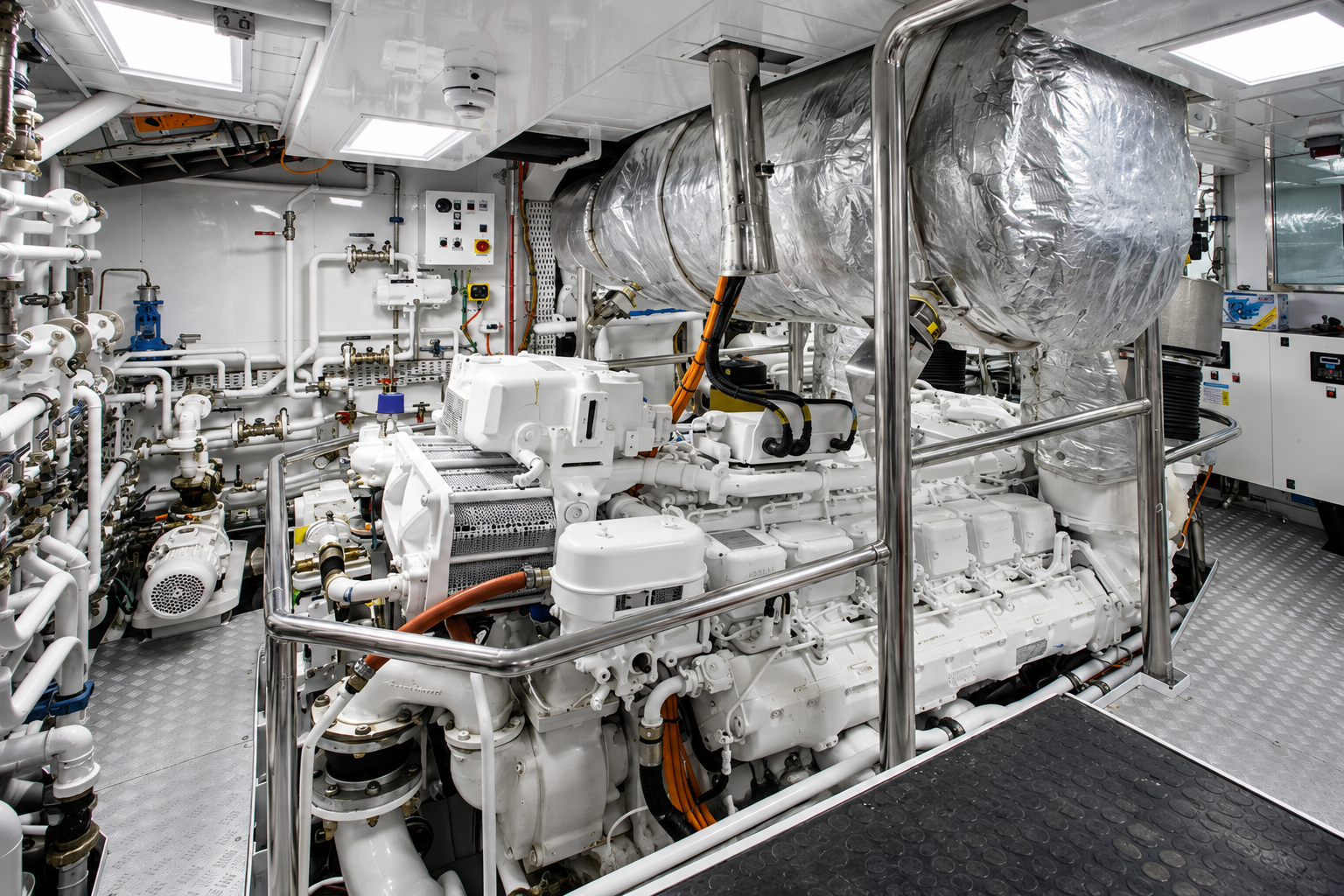
From symptoms to a defined repair scope
Useful fault investigation begins with the operating history. Changes in temperature, pressure, vibration, noise, leaks or performance should be considered alongside service records and recent interventions. Photographs, alarm histories and the crew’s observations can help establish where to start.
The first attendance may be an inspection or diagnosis rather than a fully defined repair. Where findings reveal additional work, we distinguish those recommendations from the original authorized scope so the vessel team can make informed decisions.
Mechanical repair with vessel operations in mind
Repairs may involve engine components, associated mechanical systems and installation-related issues, depending on the equipment and findings. We consider access, isolation, lifting arrangements, parts procurement and shipyard procedures before scheduling the work.
The aim is not simply to replace a component. It is to address the identified issue and agree suitable verification before the machinery returns to service.
Clear communication and documented handover
Chief Engineers need records they can use. We aim to provide a clear account of the accepted work, relevant findings, completed tasks and any outstanding recommendations. Appropriate checks are agreed for the specific installation and operational circumstances.
For recurring or age-related issues, a repair may also lead to a planned maintenance or overhaul discussion.
Service enquiries
Get technical support for an engine fault
Share the engine make and model, vessel location, symptoms and urgency. Discuss the fault.
Discuss the fault